Stage 01 / 12
Proposal
A research is born
The lead creates the research with its title, summary and sensitivity class. The platform records who created it and when, and starts its timeline.
Powered by
The connected research commons
Start a research once and CHERT Research builds its workspace in every tool — lab notebook, notebooks, experiment tracking, data versions, data management plan, repository, journal and public profile. One account, one team, one evidence trail, in English and Arabic.
Three ways in
Researchers do the work in the tools they already know. Research leads see every requirement and every stage. Editors and the public meet the result — citable, attributed and bilingual.
Sign in once and open your research in the lab notebook, a Jupyter workspace, experiment tracking or the repository — each already set up with your team and your research folder.
Create the research, set its sensitivity, build the team by username, e-mail or invite link, and follow every requirement, its source and its evidence — stage by stage.
Manuscripts arrive in CHERT Journals linked to the research behind them; datasets carry DOIs; public profiles show who did what — in Arabic and English.
One research, every workspace
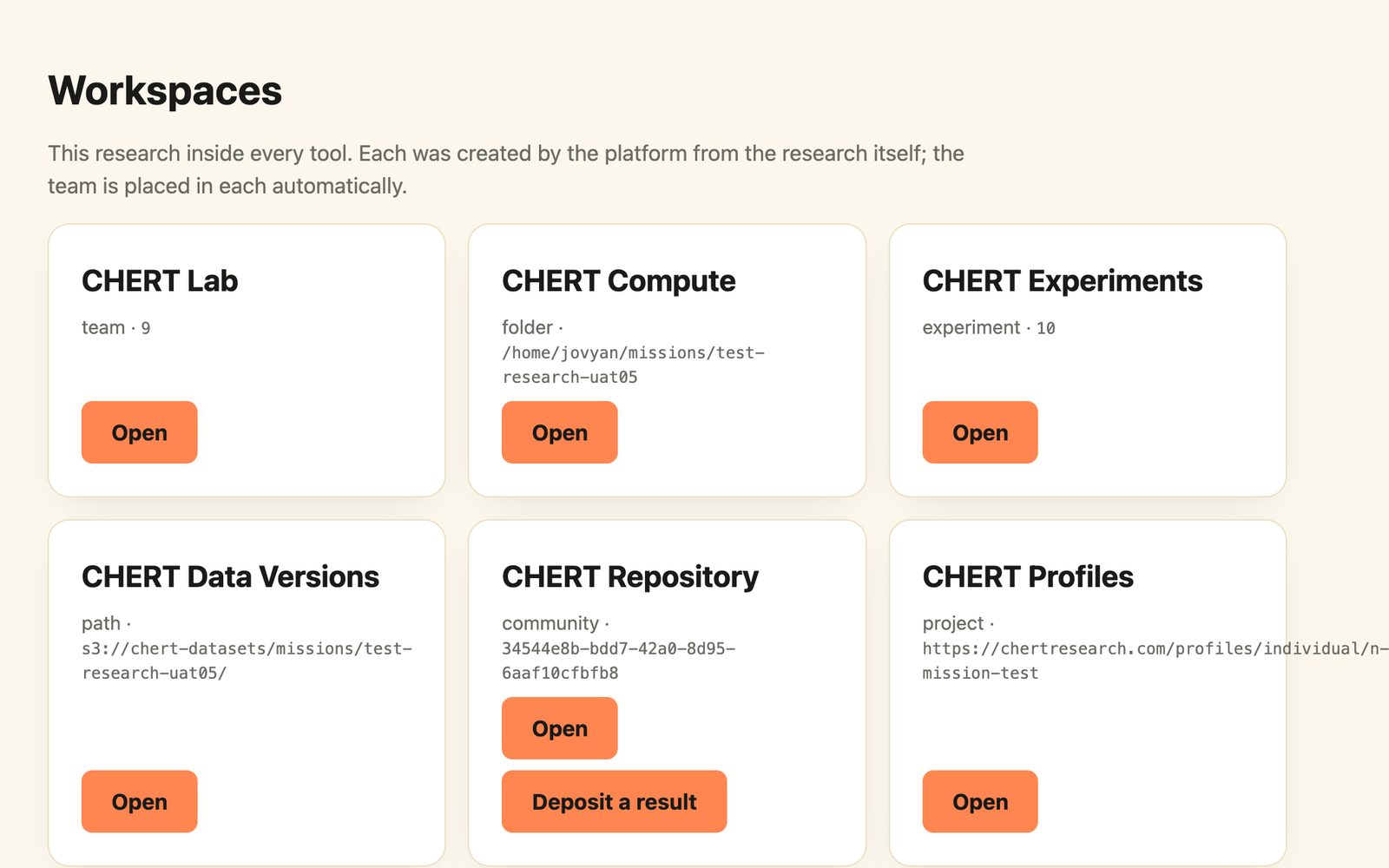
The research is the unit of ownership and access. When you create one, the platform provisions its workspace in each engine through that engine's own interface and places the team in all of them. No copies, no second accounts.
The research lifecycle
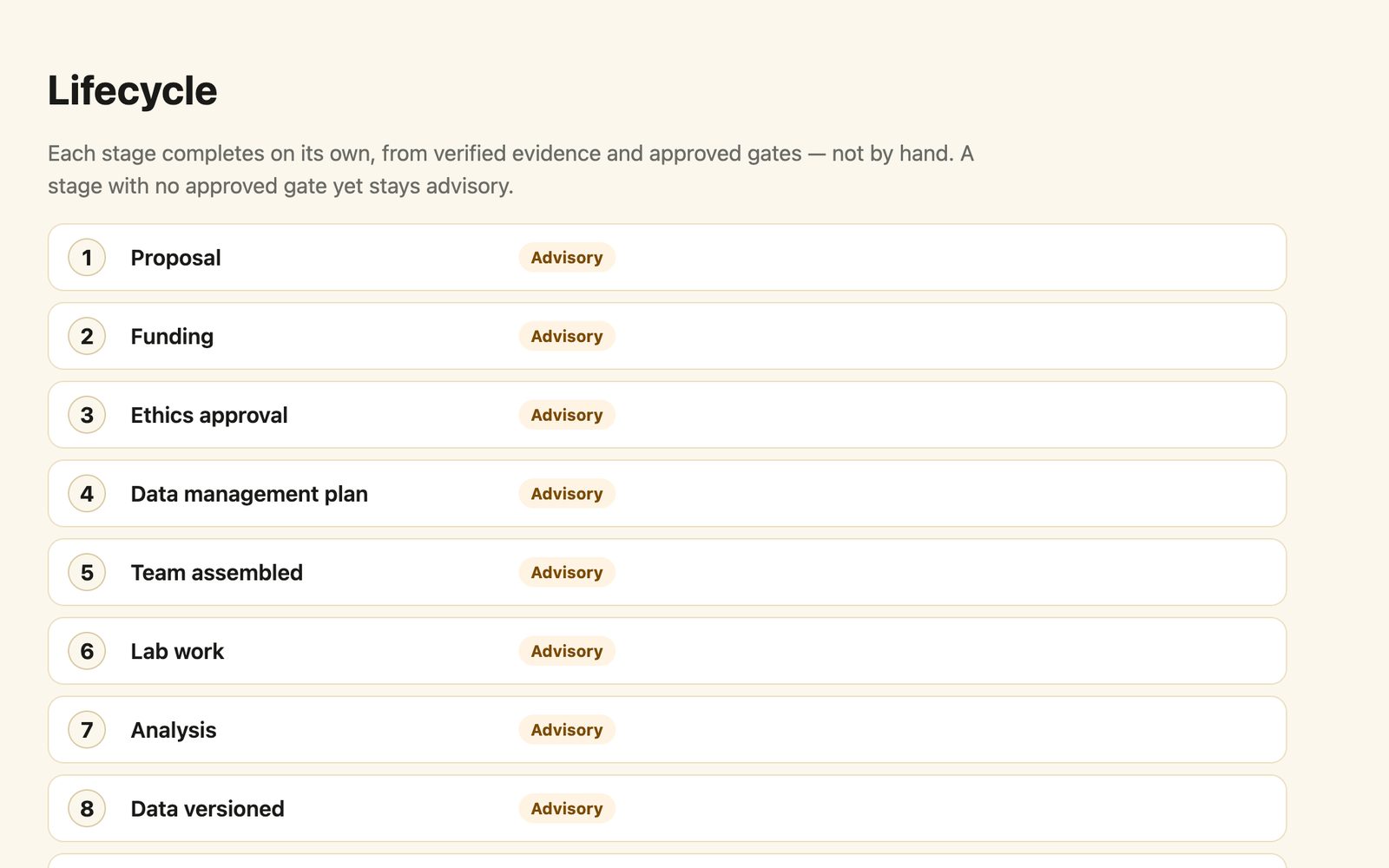
A stage completes on its own — from verified evidence and approved gates, not by ticking a box. Select a stage to see what happens and which parts of the platform make it work.
Stage 01 / 12
A research is born
The lead creates the research with its title, summary and sensitivity class. The platform records who created it and when, and starts its timeline.
Powered by
Stage 02 / 12
Who funds it, and what that requires
Funding is part of the research record — and it changes the obligations: a funded research handling personal data is asked for a data management plan, with the reason shown.
Powered by
Stage 03 / 12
Before people, animals or sites
Research involving human participants, personal data or animals needs an ethics determination or approval before data collection. The record lives in CHERT Lab, where evidence detection finds it.
Powered by
Stage 04 / 12
A machine-actionable plan
The research gets its own plan in CHERT Planning, aligned with Horizon Europe and the RDA machine-actionable DMP standard. The generated plan document is the evidence.
Powered by
Stage 05 / 12
One team, placed everywhere
Add people by username or e-mail, or share an invite link valid for 14 days. Roles run from lead to observer, and every member is placed in the research's workspace in each service.
Powered by
Stage 06 / 12
Protocols and records
Experiments, protocols and checklists are recorded in the research's Lab team. Once approved, the plan and the ethics requirements gate this stage.
Powered by
Stage 07 / 12
Notebooks next to the data
A Jupyter workspace opens with the research folder mounted for every member; runs, parameters, metrics and models are tracked in CHERT Experiments.
Powered by
Stage 08 / 12
Every dataset revision kept
From the notebook, datasets are pushed to the research's own data path, so a result can always be traced to the exact data that produced it.
Powered by
Stage 09 / 12
Citable, versioned, preserved
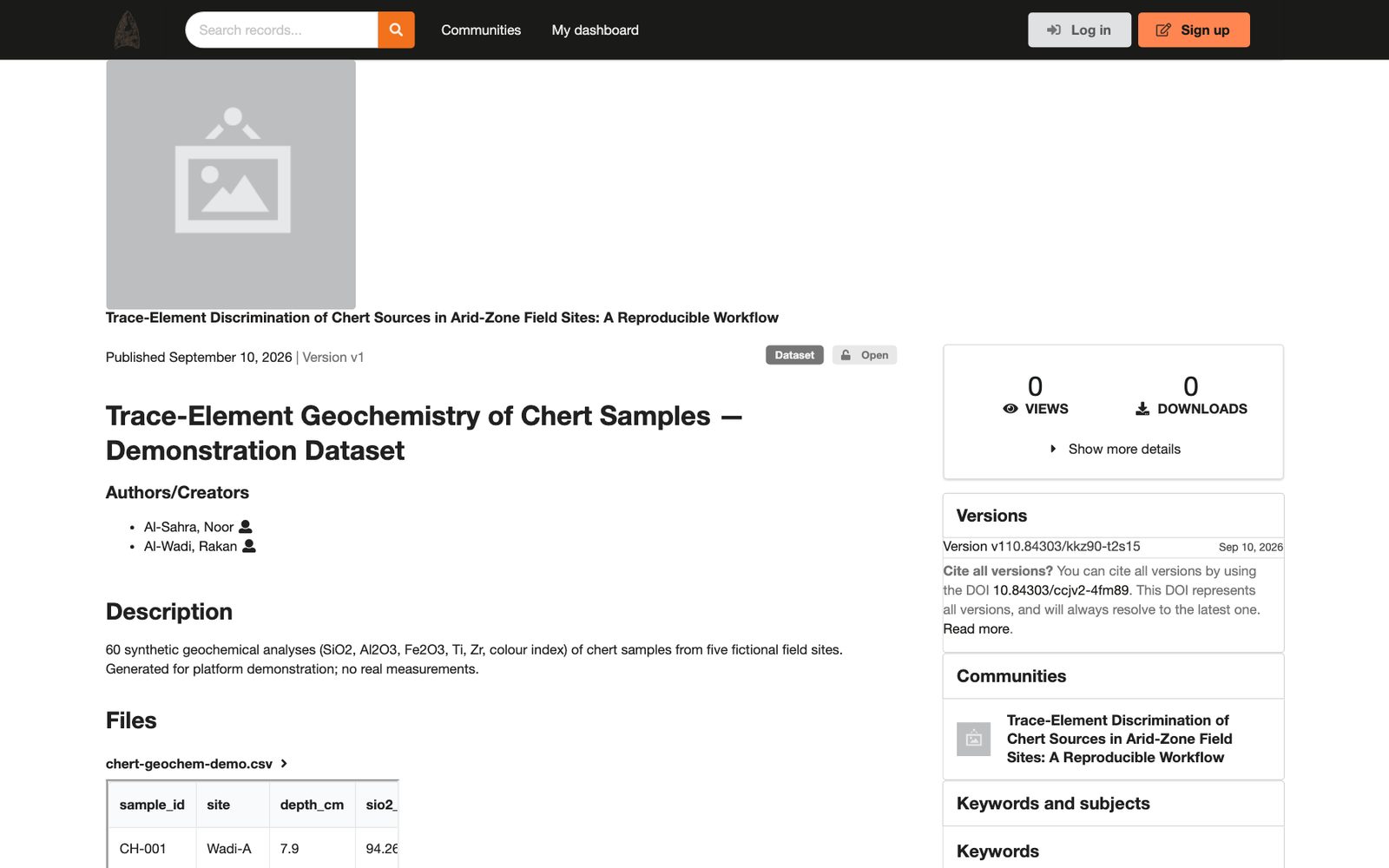
Datasets are deposited in the research's Repository community and minted a DOI, with licence, versions and files. FAIR practice is offered as guidance.
Powered by
Stage 10 / 12
Peer review, linked to its research
Manuscripts go through the CHERT Journals editorial workflow and are linked to the research. Reporting checklists such as PRISMA, STROBE and CONSORT apply where the study type calls for them.
Powered by
Stage 11 / 12
Progress you can read
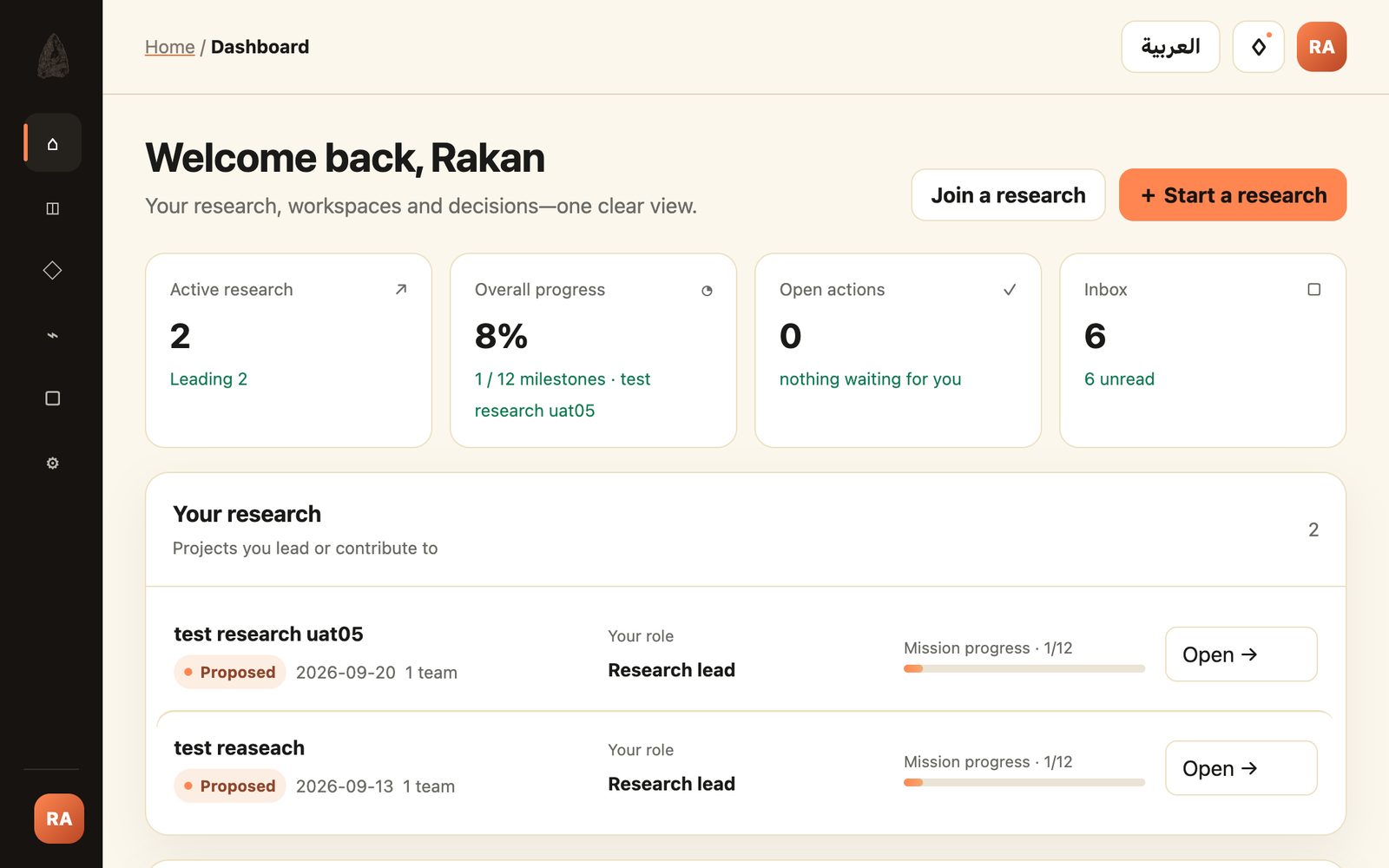
Stage by stage, progress shows on the research page and the dashboard — completed milestones out of twelve, with the next required action on top.
Powered by
Stage 12 / 12
Closing the research record
The budget sits in the research definition with funding and milestones. "Completed" is earned, not set: every mandatory criterion met, or a written override from the named authority.
Powered by
Interactive architecture
Select any component to learn what it does, or play a journey and watch a research move through the platform.
Where people arrive, work and hear back.
The research record and the rules that move it forward.
The specialist tools where the work is done.
What the research leaves behind — citable and attributed.
One identity; access follows the research.
Keeping the commons healthy and recoverable.
Details appear in the panel above the diagram.
Standards built in
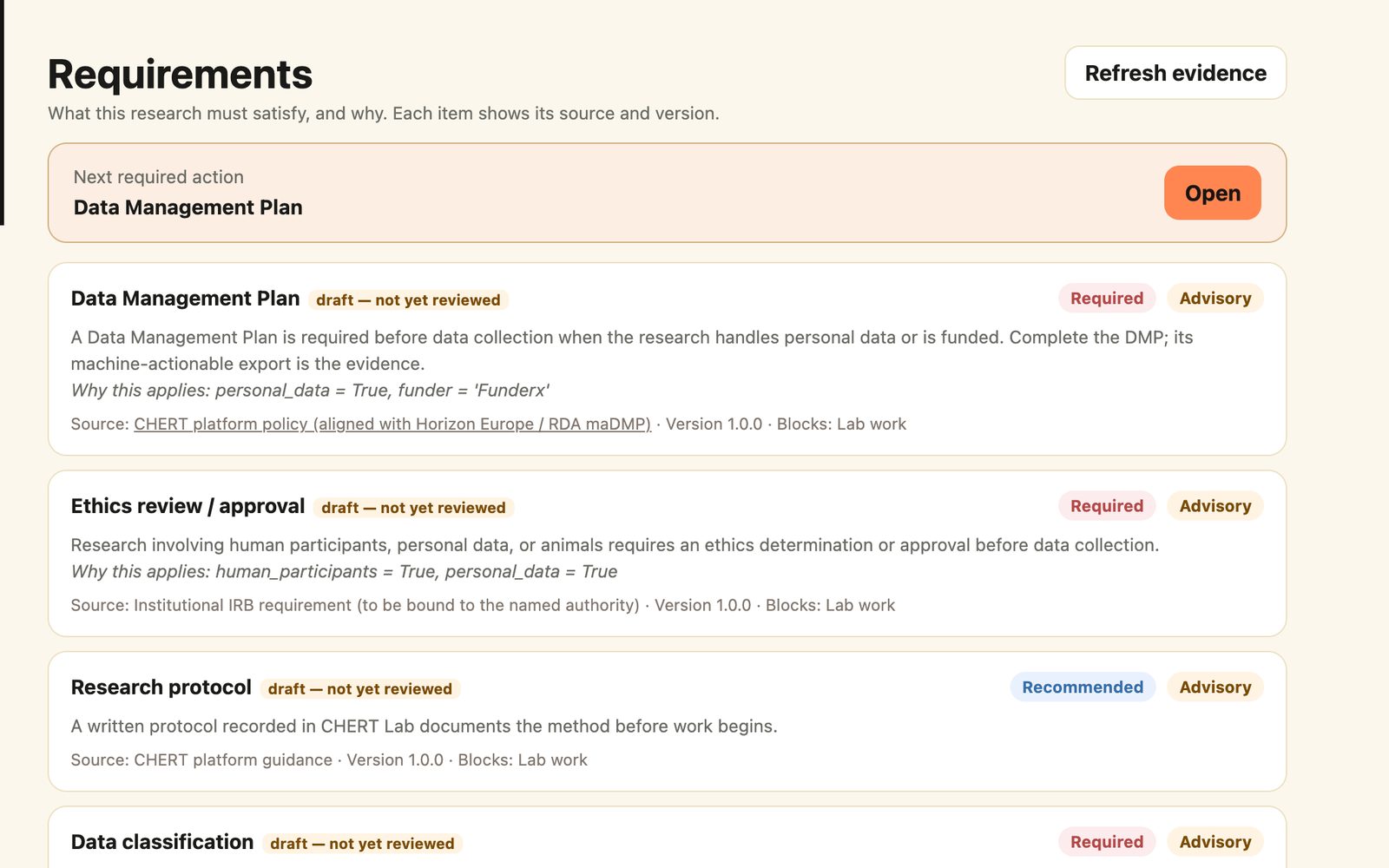
Requirements are data, not folklore: each one names its standard and version, says why it applies to this research, and is satisfied by evidence read from the engines. They ship advisory and become gates only once reviewed and approved.
Source Horizon Europe · RDA maDMP
Stage Lab work
Source Institutional review board
Stage Lab work
Source CHERT platform guidance
Stage Lab work
Source CHERT platform policy
Stage Data versioned
Source CHERT platform guidance
Stage Data versioned
Source CHERT platform policy
Stage Publication
Source FORCE11 FAIR Principles
Stage Deposit
Source PRISMA 2020
Stage Publication
Where the study type calls for itSource STROBE Statement
Stage Publication
Where the study type calls for itSource CONSORT 2010
Stage Publication
Where the study type calls for itChecklist texts are copyright of their authors; CHERT stores the structure and links to the authoritative source.
Every function, at a glance
No modules to bolt on. Every capability below shares one research, one team and one evidence trail.
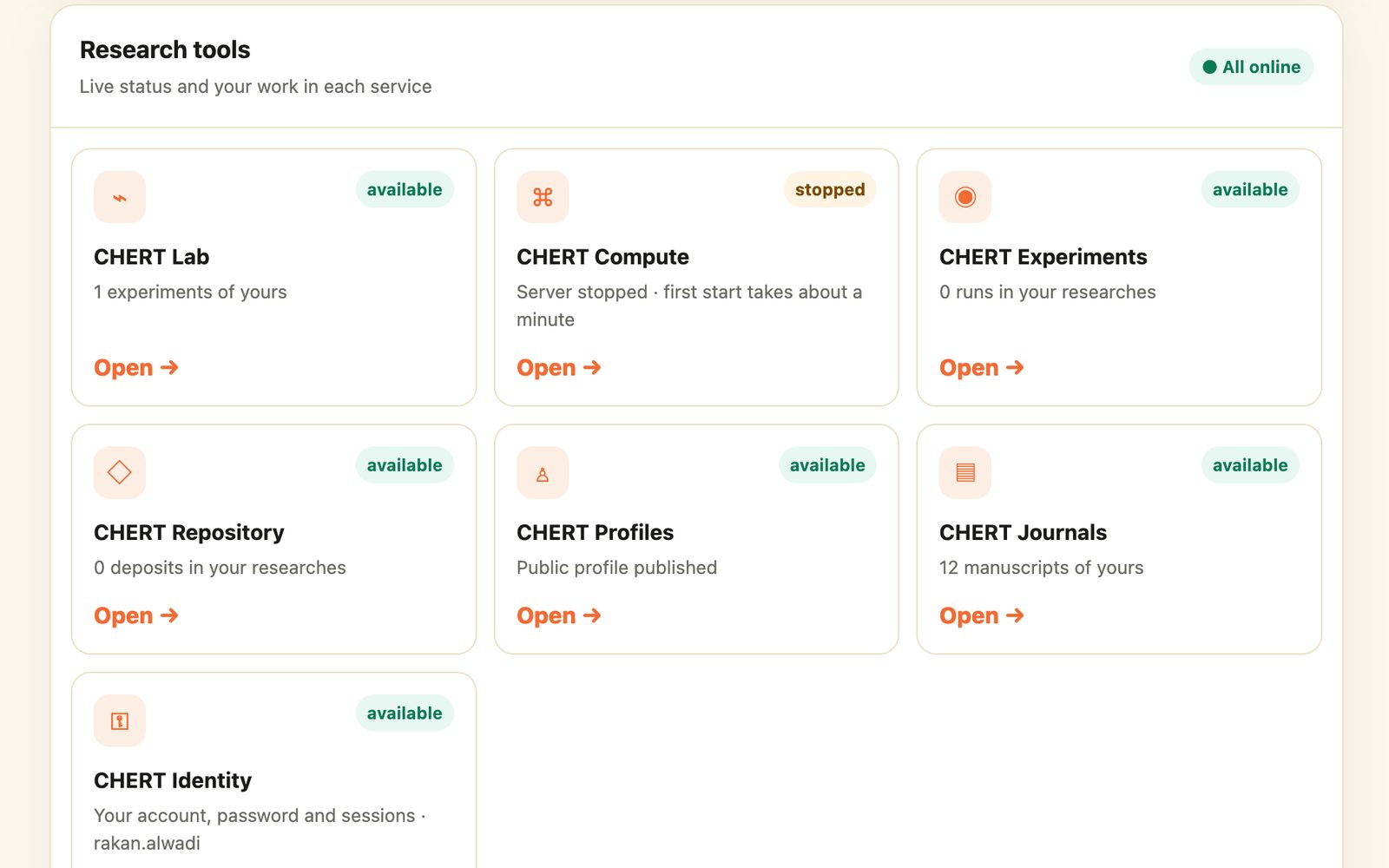
One platform, nine services
Each service does one job well and opens already scoped to your research — behind one sign-in, in your language.
Data management plans
Write the research's data management plan with guided questions and generate the plan document funders ask for.
dsw.chertresearch.comElectronic lab notebook
Experiments, protocols, resources and team records — searchable, timestamped and shared with exactly your team.
lab.chertresearch.comNotebooks
Jupyter servers where the data already is, with persistent home directories and your research folder mounted.
chertresearch.com/computeExperiment tracking
Parameters, metrics and artifacts for every run, compared side by side, with a model registry.
chertresearch.com/experimentsDataset versions
Content-addressed dataset versions, used from a CHERT Compute notebook and stored in the research's own path.
chertresearch.com/computeRepository
Deposit datasets as citable, versioned, preserved records with a DOI — in the research's own community.
repository.chertresearch.comJournals
Journal publishing with a real peer-review editorial workflow, starting with the CHERT Journal of Applied Research.
chertresearch.com/journalsProfiles & research graph
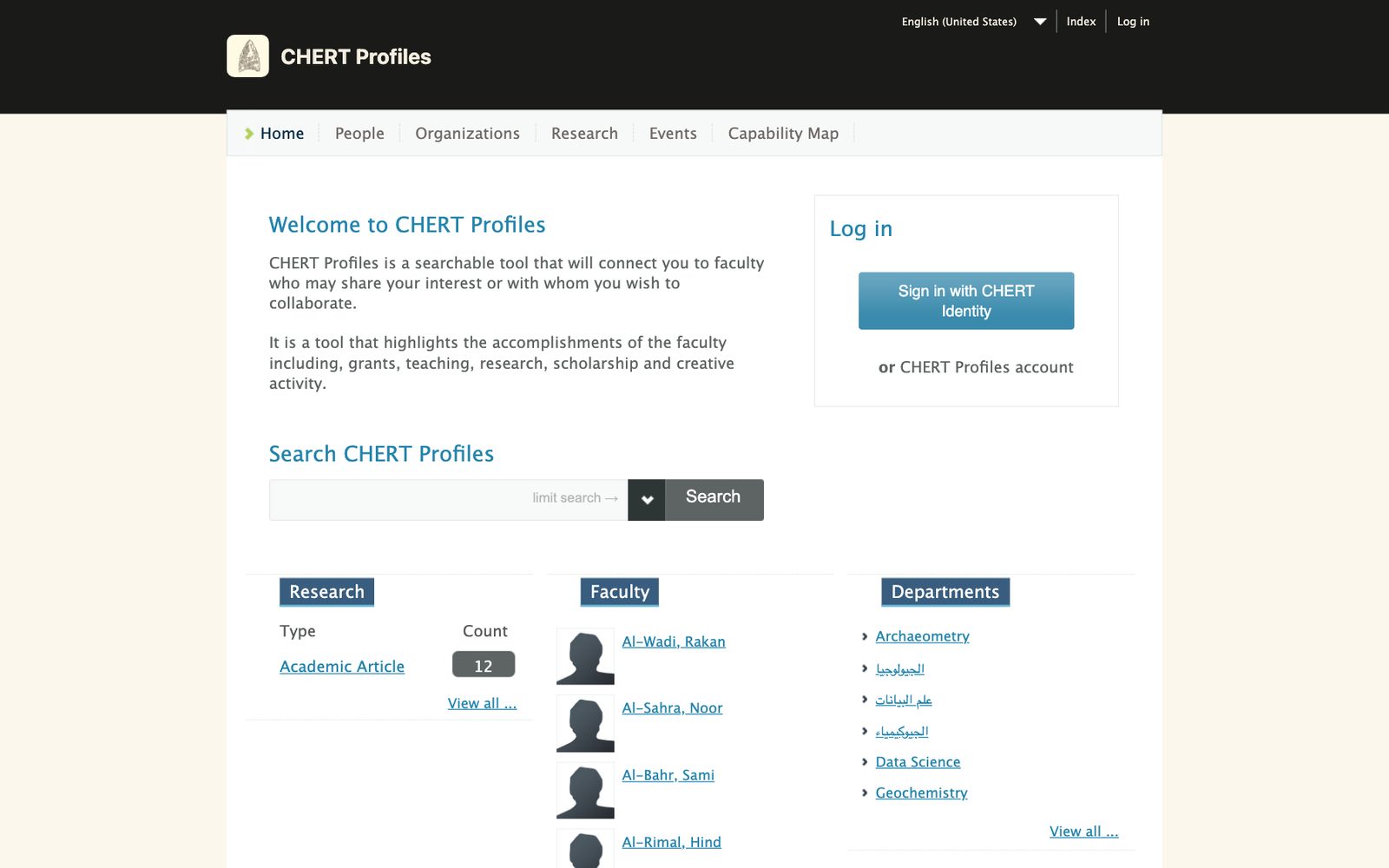
Public researcher profiles, organisations, research and the capability map that connects them.
chertresearch.com/profilesIdentity
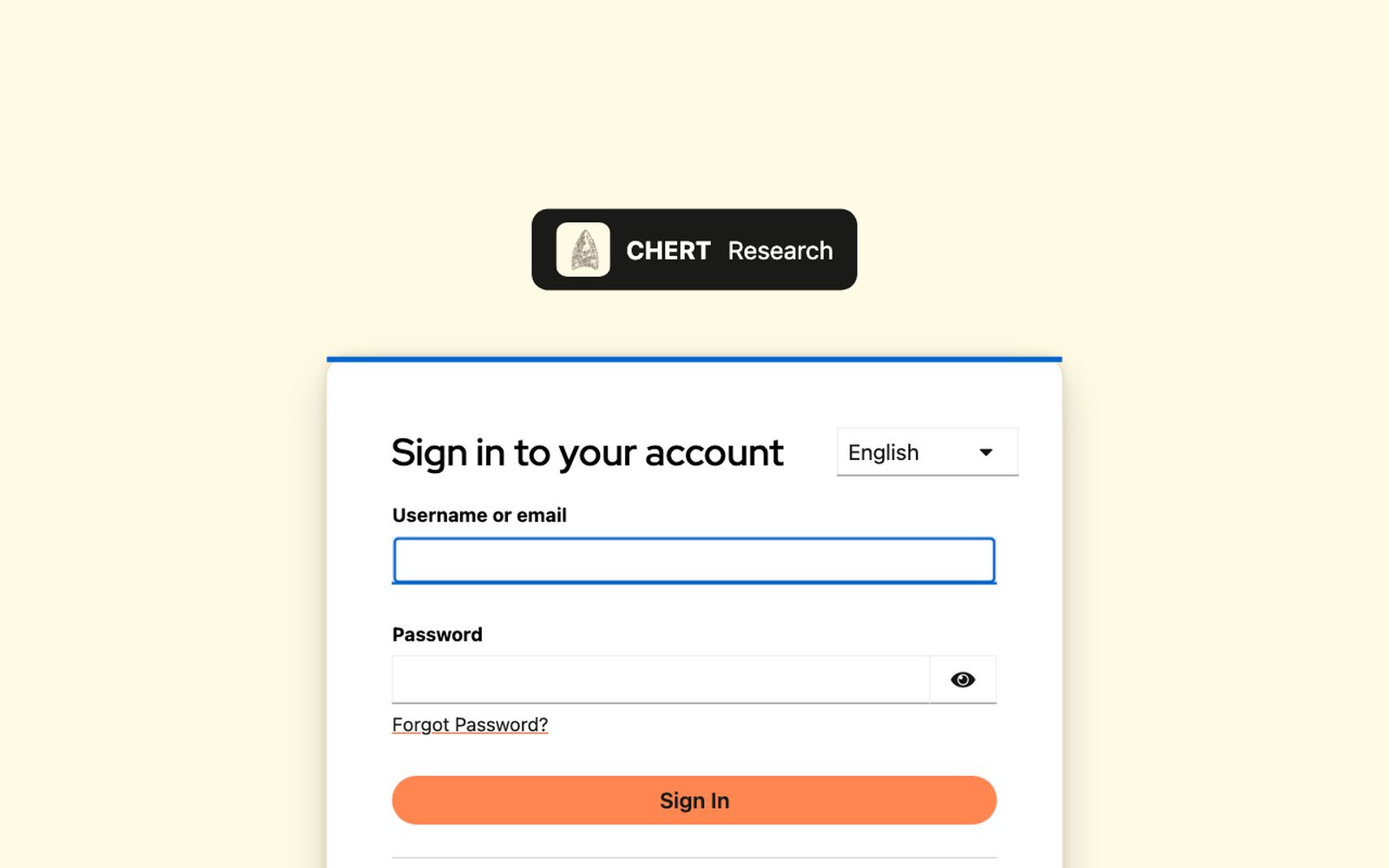
One account for every CHERT service. Manage your profile, password and sessions in one place.
identity.chertresearch.comInside the platform
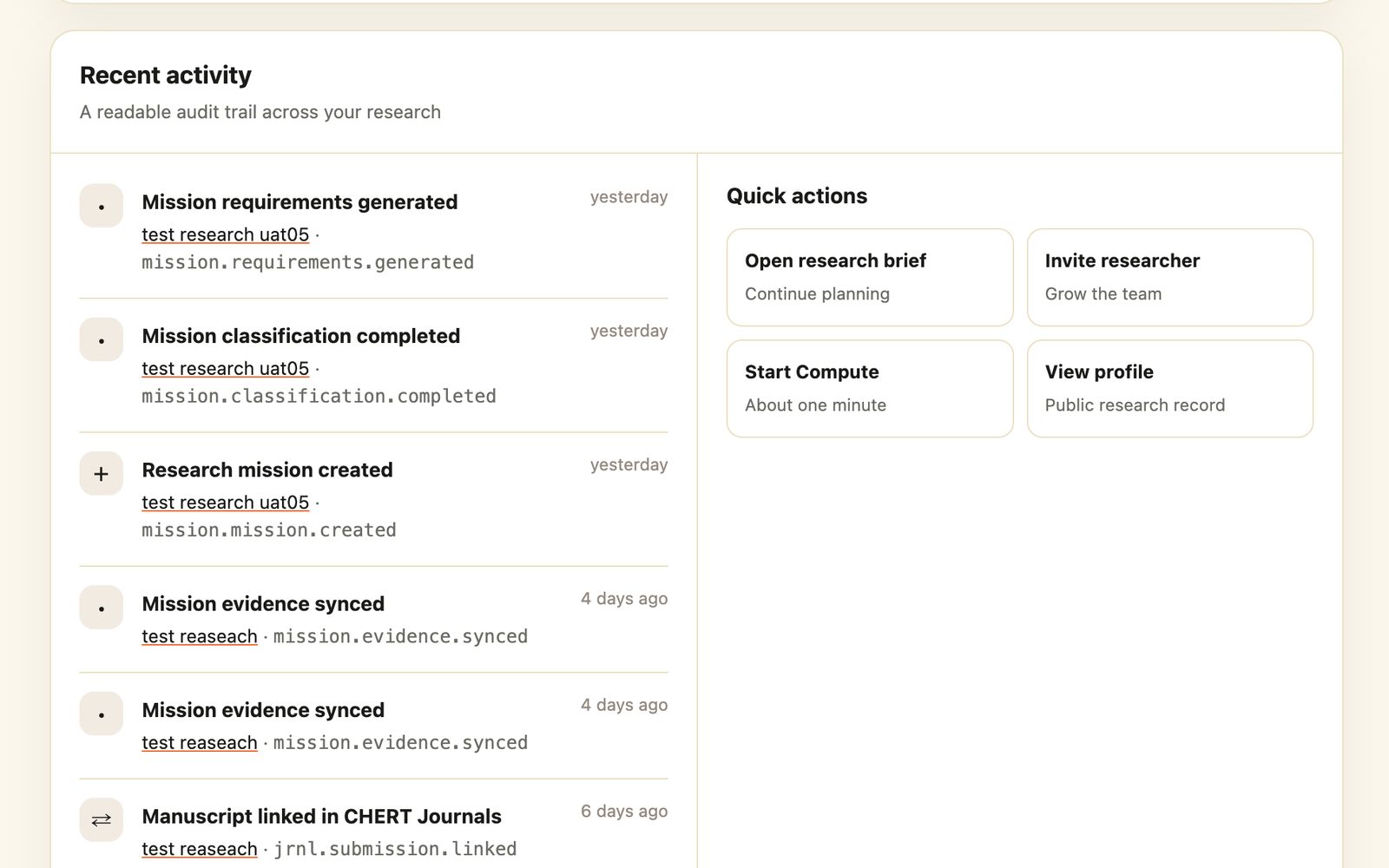
Captured from chertresearch.com during acceptance testing — signed-in screens from a test research, public screens as anyone sees them.
The open research stack
CHERT Research stands on mature open-source software, pinned to exact releases and integrated through each engine's own interfaces. Licences are preserved; source is available on request.
The specialist environments researchers use to create, analyse, preserve and publish knowledge.
Identity, protected access, durable events and unified discovery turn separate tools into one platform.
Purpose-fit relational and object storage supports records, journals, labs, artifacts and datasets.
Orchestration, secure ingress, certificates, software supply chain, observability and recovery.
Mature cache, queue, indexing and serving components strengthen the specialist research engines.
Licences verified against the pinned engine inventory · 9 Oct 2026
Why CHERT Research
Ownership and access follow the research and its sensitivity class — never the institution. Collaboration across institutions is the purpose, not a leak.
Every surface ships in both languages with proper right-to-left Arabic — the site, the dashboard, the lab notebook, experiment tracking and the sign-in.
Progress is read from the engines — a plan, a record, a run, a DOI — and every decision is an attributed event on the timeline.
Requirements carry their source and version, explain why they apply and ship advisory until reviewed — no invented rules.
Every engine runs on CHERT's own infrastructure with pinned releases, encrypted backups and no per-seat licences.
Five sensitivity classes, a public-only publication policy for profiles and every non-public route behind one identity gateway.
What comes next
Create your CHERT account, start a research and watch every workspace appear — or sign in and continue from wherever your work is now.